
One way to
think about art is to understand it as an attempt to use human creativity to
help us see life and reality with greater clarity. Which is why setting aside
time for unhurried visits to art museums and galleries is so essential to
growth towards maturity. All the elements that come together in the visual
arts—color, form, line, shape, depth, composition, light—are reflections on
aspects of creation that somehow reflect the goodness of the Creator who called
them into being as good gifts for his creatures. Just as God is the final
source of Truth so is he the ultimate spring of Glory, and believing one is
more essential than the other is to place our preferences over his revelation
of himself. God’s revelation of truth is glorious, and his glory is true, world
without end.

Just as
some aspects of truth are difficult to capture with words and arguments, some
aspects of life and reality are so difficult to capture in art as to seem
impossible: the flow of time, air, water; things that are real yet transient
and ephemeral; living shapes in inanimate materials. Enter Andy Goldsworthy, an
artist who lives in Scotland and whose work is lovingly embedded in nature even
when it appears in urban settings.
It is never
easy to describe art in words. “Writing about art,” comedian, actor and painter
Martin Mull noted, “is like dancing about architecture.” You can do it, and it
can even be full of insight but the best plan is to simply receive the art
itself. And if it difficult to write about art in general, the problem is
compounded when talking about Goldsworthy’s art because often he is interested
in capturing something that is natural.

One good
way to approach Goldsworthy’s work is in Rivers
and Tides, a documentary film that simply follows the artist so we can
watch him create and listen to him reflect on what he is doing. It also allows
us a lovely glimpse into the creative process, at least as Goldsworthy
experiences it, that is both accessible to non-visual artists as well as a fine
study, for Christian viewers, of what it means to demonstrate one essential
aspect of being made in the image of God.

Goldsworthy
makes his living by commissions, teaching, and by photographing his most
ephemeral works to allow us to see them when they are too remote and too
temporary for viewers to experience. The fact that he uses such simple,
ordinary materials to produce such stunning pieces of art, and that his
appreciation for nature is so unpretentious and tender is enough to render me
speechless and grateful.
I recommend
Rivers and Tides to you
Rivers and Tides: Andy
Goldsworthy Working with Time, directed by Thomas Riedelsheimer (2001, 90
minutes). Available on DVD and on YouTube.


The appeal
of detective stories includes our need for order when crime has introduced
disorder (always a dangerous state), and our yearning for justice when
something has gone wrong (which threatens our humanity). We are also drawn to
them because we all live moment by moment with uncertainty and so desperately
want a dependable hero.
Somehow we
know it is too much to ask that we escape the uncertainty. Even if the
brokenness was removed we would remain finite. The uncertainty can be endured,
however, if we have a hero who can sort things out, make things right, and keep
us from tumbling into a pit from which there is no recovery.
There is a
reason why detective stories center around a particular detective. In the final
analysis we are attracted to the stories not because of the variable crimes but
because of the dependable detective. Even if he/she fails to solve the case, we
know they tried their best and left no stone unturned.
As a
Christian I would argue that this archetype is imprinted in our consciousness
because we are part of a story in which the hero becomes the savior. All is
lost until the hero produces the solution, and in the end sheds light into the
shadows where death has tried to hide.
%2B1.jpg)
Longmire
Walt
Longmire (played by Robert Taylor) is the sheriff of Absaroka County, Wyoming.
It is a sprawling place, dominated by gorgeous peaks and wide lush landscapes
that give the cinematographers ample opportunity to frame lovely background
shots. (The series is filmed in New Mexico, but no matter—the landscape is so
stunning that it is reason alone to watch it.) Assisted admirably by Deputy Vic
(played by Katee Sackhoff) and by the duplicitous Deputy Branch (Bailey Chase),
Longmire wrestles with the tragic death of his wife as he tries to keep law and
order in a place where the citizens prize self-sufficiency and privacy. Walt’s
best friend, Henry Standing Bear (Lou Diamond Phillips) helps bridge the sad chasm of distrust and prejudice
between whites and the Native Americans who live on a reservation within the
county.
%2B2.jpg)
Good
writing, superb cinematography, and fine character development makes me wonder
why this A&E television series has not garnered more attention and awards.
The filming of each episode includes a Native American consultant to assure the
accuracy of what is depicted. One of the things I most appreciate about Longmire is that it keeps me interested
but is never frenetic, maintaining a thoughtful pace that not only suits the
setting but that seems to take me as viewer seriously.
If I lived
in Absaroka County, Wyoming, I’d want someone like Walt Longmire to be wearing
the sheriff’s badge. In fact, I’d like someone like Walt Longmire to be the
sheriff wherever I lived.
(A&E, 3
seasons 2012, 2013, 2014; each episode 50 minutes)
%2B3.jpg)
Sherlock
One of the
primary reasons why Sherlock Holmes remains a perennial favorite is that he is
a dependable hero. He may be cold-hearted and rational to a fault, he may have
a drug problem and treat people abominably, he may play the violin horribly and
have no friends for good reason, but we always know that when he is on the
case, no better detective could be imagined.
The recent
BBC series that locates the famous detective (played with superb quirkiness by Benedict
Cumberbatch) in 21st century London is a fine addition to the Holmes
legacy. Along with his sidekick Dr. Watson (played by Martin Freeman),
Sherlock’s brother, Mycroft (played with great comic effect by Mark Gatiss),
and Sherlock’s long suffering housekeeper, Mrs. Hudson (Una Stubbs), the stage
is set for solving crimes in a way that only Sherlock Holmes could accomplish
it.
%2B4.jpg)
For all the
changes this series brings to the classic detective, it allows Holmes to remain
Holmes, and that is one reason the series succeeds. It is also produced with a
clear love of Arthur Conan Doyle’s detective and stories, and that love is reflected
in the sharp filming, editing, and dry wit that shines in every episode.
(BBC, 4
seasons, each episode 90 minutes).

This weekend Margie and I took a day away, to be together,
to talk, and be refreshed. We determined not to hurry but to enjoy the
leisureliness of the time, to let things unfold quietly. Our topics of
conversation were only partially determined ahead of time—including some
speaking and writing we are working on—but that consumed only a portion of the
day. The rest of the time we talked about whatever came up, and enjoyed times
of silence together.
We drove to Minneapolis, and so began talking on the hour’s
drive from Toad Hall to our first destination: Black Sheep Coffee. We ordered
lattes (Margie’s was soy) and as always, found the atmosphere lovely and
refreshing. Then we drove to The Museum of Russian Art to see two shows: “Concerning
the Spiritual in Russian Art” and “Jewish Life in the Russian Empire:
Photographs from the Museum of Ethnography, St. Petersburg, Russia.” Lovely,
poignant, moving. Before having dinner at the Himalayan Restaurant (very good),
we wandered over to Lake Harriet, found a bench near the water and sat in the
sun.

The bench near Lake Harriet was situated between walking and
biking paths, so bikes swept by just behind us and people walked or jogged just
in front of where we sat. All ages were represented, some strolling leisurely,
some walking dogs or pushing baby strollers, others in pairs or little groups.
After sitting there for a while we realized we were hearing snatches of
conversations, so I started jotting down what we could make out.
(boy) …I didn’t know
if you needed a drink…
(woman) …I just don’t
feel like going to work tomorrow…
(woman) …they bought a
new coffee table… (woman) …and they
redid the tile, and they redid the bathroom, and the hall, and it looks
wonderful…
(man) …Triska! Triska!
No! No!...
(woman) …I said I was
definitely concerned about the conversation…
(man) …You can go
boating out there on this lake? (man) Sail
boating.
(woman) …so far my
white sheers go well enough…
(woman) …my friend and
I were starry-eyed…
(woman) …my bike is
really slow. I’ve got it in the highest gear though…

(man) …my flag holder
in front has created…
(woman) …I’m going to
start digging…
(man) …I didn’t really
feel good but I’m doing it anyway…
(man) …is that an
answer? (woman) What?...
(boy) …give me my bike
back, c’mon, give me my bike back…
(man) …I didn’t know
if that was the trade-in value…
(woman) …my shoulders
are sore, but I don’t know…
(woman) …black and
red, black, red dot, red dot…
(boy) …I need to go to
the bathroom (woman) Well right now
we are kind of moseying…
(man) … (laughs) I
should probably creep down (laughs)…
(boy) …faster, Dad…
(man) …and why is
that? (woman) It’s kind of cool. No…
(man) …no, we really
do (woman) I thought your mother took
care of it (man) Yeah, I did too…
(man) …another alternative
is to say to the group…
(girl) …zippity
zippity do…
(man) …I know it is so
annoying (woman) Yeah, Heather
watches people…
(woman) …is she
celebrating Mother’s Day? (man) Yeah,
my sister knows this seedy bar…
(woman) …my cousin
won’t make a dessert…
(young woman on cell phone) …so it is, like, possible, and she said, oh gosh yes, and I was like,
because I told her so, and she was like, literally overwhelmed…
And that’s the news from here.
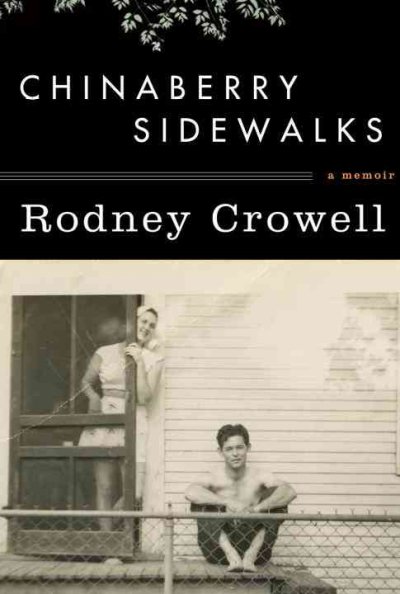
Both Keith
Richards and Rodney Crowell have spent a lifetime in music, and both can look
back on performing and recording legacies that have served to touch the
imaginations of numerous fans. It’s true that Crowell has never achieved the
fame of Richards and the Rolling Stones, but art is measured in reach as much
as it is depth, and here Crowell has the edge. Both men know firsthand
something of the devastation wrought by alcohol and drugs, and both can look
back on relationships that were thrown away selfishly and of others that
brought sweet rumors of grace.
I read both
books because I respect both men as musicians. I like the music of Crowell far
more than that of Richards, but recognize that both men have honed their craft over
many decades of dedicated practice, touring, and recording. Their styles are
different, of course, very different, but both are part of the cultural world in
which I grew up and still live. Both men are still active, making music and
thus helping to both shape and reflect the culture in which I live and seek to
understand.
Yet, the
books are very different. Keith Richard’s Life
is massive and detailed, full of gossip and facts, reflections and anecdotes.
Rodney Crowell’s Chinaberry Sidewalks
is more modest, a childhood memoir of a home in a poor Texas community with an
alcoholic, violent father and an unstable mother given to Pentecostal fervor.
But there is a deeper and more vital difference as well. Richard’s reflections
reek of self-satisfied self-centeredness, and seldom is grief or regret expressed
over the excesses in which he indulged. Crowell’s story, in contrast, is imbued
with a quiet honesty tinged with forgiveness, the thoughtfulness of a man who
tells his story, warts and all, but does not think that all is fine simply
because it is his story.

I did not
carefully read every word of Life,
but scanned some sections because I was weary of the tone. When I finished Chinaberry Sidewalks, on the other hand,
I purchased tickets to go see Crowell in concert—it was a wonderful evening. Recently
Crowell has been collaborating with poet Mary Karr (I recommend the CD Kin, with Karr’s lyrics and Crowell’s
music and performance), after being in Emmy Lou Harris’ band since 1975.
One thing
is certain: blatant excess does not necessarily mean an artist can not achieve
excellence, and unless Richards has sources of which I am unaware, his memory
is both remarkable and far better than mine. Those with a special interest in
the Rolling Stones and their very long career at the top of the charts in
popular music will want to read Life.
Richards reflects on numerous concerts and recording sessions in the book in
incredible detail.
Listening
to people’s stories is important if we want to hear something that gets past
the surface details. Crowell uses the details of his childhood to tell a deeper
story, while Richards amazes us with gossipy trivia in what seems to me to be
primarily an ongoing exercise in self-aggrandizement. If you doubt that an
artists’ deepest convictions and values—the world and life view that resides in
their heart of hearts—shapes their music and their posture in life, read these
two books, and then listen to some of Richards’ and Crowell’s music.
Life by Keith
Richards with James Fox (New York, NY: Little, Brown and Company; 2010) 547
pages + index.
Chinaberry Sidewalks:
a memoir by Rodney Crowell (New York, NY: Alfred Knopf; 2011) 259 pages.